
Guide
Senior Dog Anxiety: A Calm, Practical Guide for Caregivers
November 1, 2026
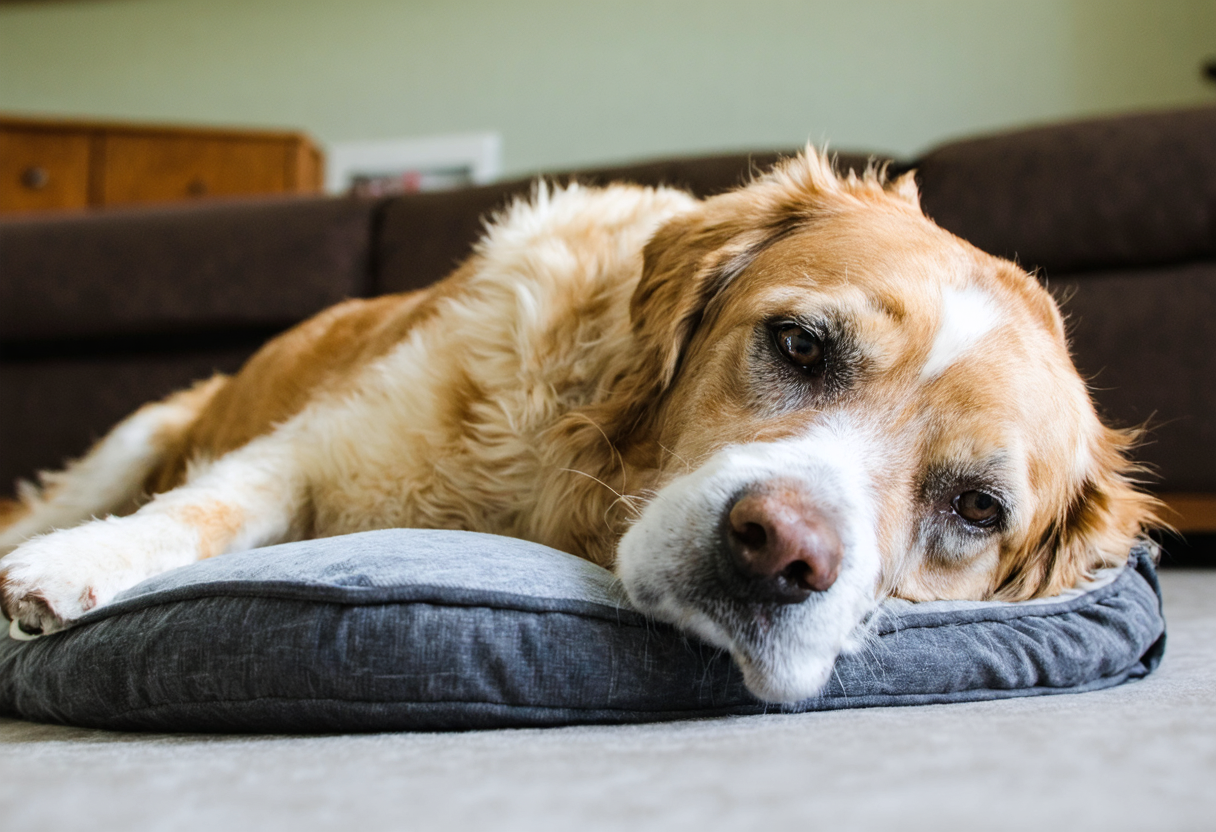
Watching an older dog struggle with worry is hard. The dog who used to settle quickly now paces at dusk, follows you from room to room, or panics the moment you pick up your keys. If that sounds familiar, you are not imagining it, and you are not failing your dog. Senior dog anxiety is a common concern, and it deserves a calm, practical conversation.
I want to be clear about what this article is. It is general information from someone who loves old dogs, not a diagnosis. Your veterinarian is the right person to look at your particular dog. What I can do is lay out why anxiety can show up in later life, what may help at home, and which questions are worth bringing to your vet.
One idea runs through the whole piece: in an older dog, anxiety is rarely just a behavior problem. It is often a signal. Pain, failing eyesight or hearing, confusion, or a medical condition can sit underneath it. Looking at the whole dog, not just the symptom, tends to give the kindest and most useful answer.
How do you calm an anxious senior dog?
Start by looking for the reason behind the worry, because calming a dog is far easier when you know what is frightening or uncomfortable. Then work on three things at once: predictability, physical comfort, and gentle mental engagement.
Predictability matters a great deal to many older dogs. Feed, walk, and settle your dog at roughly the same times each day. When something must change, such as a move, a new baby, a new work schedule, or a houseguest, introduce it slowly and keep the rest of the day as familiar as you can. A dog who cannot see or hear as well as before may be leaning on routine to make sense of the world.
Physical comfort comes next. Give your dog a bed that is easy to climb onto and supports sore joints, placed somewhere quiet but not isolated. Non-slip rugs on slick floors can make a real difference, since a dog who slips once may become tense about walking at all. Ramps or steps can help with couches, cars, and stairs. If you suspect your dog is hurting, say so to your vet. Untreated pain can look a lot like anxiety.
Gentle engagement helps too. Slow sniffing walks let your dog gather information at their own pace. Simple food puzzles, a snuffle mat, or a few treats scattered in the grass give a worried mind something satisfying to do. Short sessions are better than long ones, and you can stop whenever your dog seems tired.
How you behave matters as well. Speak softly, move slowly, and avoid fussing over your dog in a tense, worried voice. Dogs read our mood. A relaxed person sitting nearby, perhaps reading, can be calming in a way no gadget is. Do not punish a dog for anxious behavior. Fear does not respond to scolding, and punishment can make the worry worse.
How do you help a senior dog with separation anxiety?
Separation anxiety means a dog becomes genuinely distressed when left alone or when separated from a particular person. Signs can include barking or howling, pacing, drooling, scratching at doors, destroying things near exits, and toileting indoors despite being house-trained. Some dogs stop eating until their person returns.
Before assuming it is separation anxiety, rule out other causes. An older dog who has accidents may have a urinary problem, an age-related loss of bladder control, or another health condition, not an emotional one. A dog who barks when alone may be disoriented or in pain. Ask your vet to examine your dog first. This step saves frustration and keeps you from training around a problem that actually needs medical care.
If the vet agrees that separation distress is part of the picture, these general steps are commonly used:
Keep departures and arrivals low-key. A long, emotional goodbye can raise your dog's arousal before you walk out. Calmly leave, and calmly return.
Practice short absences. Start with a duration your dog can handle without showing stress, even if that is only a few seconds behind a closed door. Build up very slowly. Moving too fast is a common reason this kind of training stalls.
Watch for early signs of stress. If your dog starts panting, whining, or pacing, the absence was too long. Shorten the next one. A pet camera can show you what happens after you leave.
Arrange company when it is practical. A trusted friend, a family member, a pet sitter, or a dog walker visiting midday can break up a long stretch alone. Some older dogs do well in a quiet daycare setting, though others find it overwhelming, so it depends on the dog.
Provide a safe, comfortable space. For some dogs that is a gated room with a bed and familiar scents. Be careful with crates. A dog who has never been crated, or who panics inside one, may injure themselves, and an older dog with stiff joints may not tolerate confinement well.
If progress is slow or your dog's distress is intense, ask your vet about a referral to a qualified behavior professional. Separation anxiety in older dogs may respond best to a plan that combines training, environment changes, and sometimes medication, guided by someone who can watch your dog.
What can I give my senior dog for anxiety?
The safest place to start is with things that carry little risk. Comfort, routine, exercise suited to their body, and mental enrichment are all things you can give today.
Beyond that, a few categories of products are commonly discussed. Pressure wraps that gently hug the torso, calming music or soft background sound, plug-in or collar-style pheromone products, and chew items or food puzzles that occupy a worried dog are all things some owners try. Results vary from dog to dog, and none of them is a cure. Think of them as supporting tools.
For supplements, calming chews, and special diets marketed for stress, talk to your veterinarian before you buy anything. Older dogs often take other medicines or have kidney, liver, or heart conditions, and an ingredient that is harmless for one dog can be a problem for another. Your vet can tell you whether a supplement makes sense, which kind, and how it fits with the rest of your dog's care. I will not give amounts here, because that is a decision for your vet and your dog's health history.
Please do not give your dog human anxiety or sleep medicines, or leftovers from another pet's prescription. Some are dangerous to dogs. If a medication is appropriate, your vet is the one who can prescribe it, explain what to watch for, and arrange follow-up checks.
And do not underestimate the free options. A warm lap, a slow brushing session, a short walk at a quiet time of day, or simply sitting on the floor beside your dog can be among the most useful things you offer.
How do you treat anxiety in senior dogs?
Treatment tends to work best as a combination, built step by step with your vet. Here is the general shape of it.
First, a medical check. Your vet may examine your dog, ask when the anxiety started and what it looks like, and decide whether tests are worthwhile. Pain from arthritis or dental disease, hormone problems, urinary or digestive troubles, and loss of hearing or sight can make a dog more anxious. Treating those underlying issues may lower anxiety on its own.
Second, a look at cognitive changes. Some older dogs develop a condition similar to dementia, called canine cognitive dysfunction. Signs can include confusion in familiar places, staring at walls, changes in sleep, pacing, and new anxiety. It cannot be diagnosed from a blog post, but it is worth describing to your vet if these signs sound familiar. Your vet can discuss management options, which may include diet, enrichment, and in some cases medication.
Third, behavior modification. This means changing how your dog experiences the things that trouble them, using patient, reward-based methods. It might involve gradually getting used to a sound, practicing being alone, or teaching a settled behavior on a mat. Punishment-based or forceful approaches are not appropriate for a frightened dog.
Fourth, the environment. Reduce triggers where you can. Close curtains during storms, create a quiet room, use white noise, add lighting in dim hallways, and keep walkways clear for a dog who sees poorly.
Fifth, medication when it is needed. For some dogs, anxiety is severe enough that training and comfort measures are not enough on their own. Your vet may discuss prescription options, along with benefits, side effects, and monitoring. Medication is not a failure or a shortcut. For a dog in real distress, it may make the other steps possible, because a calmer dog can learn and rest.
Whatever you try, keep notes. Write down when the anxiety happens, what came before it, how long it lasts, and what seemed to help. Short video clips are very useful at the vet's office, since many dogs behave differently away from home.
Is a pheromone diffuser effective for separation anxiety in older dogs?
Owners often wonder about a specific plug-in or collar product, and I understand why. A simple device you can plug in sounds appealing when you are worn out and worried. But I do not name or rate individual products here, so I will talk about the whole category: dog-appeasing pheromone diffusers, sprays, and collars.
The honest answer is that they may help some dogs, help a little or not at all for others, and are not a stand-alone treatment for true separation anxiety. A dog with a serious case is unlikely to be fixed by a diffuser alone. These products are low-risk for most households, which is part of their appeal, but low risk does not mean high reward.
If you want to try one, treat it like a small experiment. Use it alongside, not instead of, a gradual alone-time plan and a vet check. Pick a day to start, keep your other changes steady so you can tell what is making a difference, and watch your dog's body language: softer eyes, looser posture, easier settling, shorter periods of pacing. If you see nothing after a fair trial, it is reasonable to move on rather than keep spending money.
Because older dogs often have several overlapping issues, ask your vet whether a pheromone product fits your dog's situation. Your vet can also tell you whether it is time to look at stronger options.
Should a senior dog with anxiety be put down?
This is the question nobody wants to type, and I do not want you to feel judged for asking it. Living with a dog who is frightened day and night is exhausting, and the guilt that comes with that exhaustion is heavy.
Anxiety by itself is not usually a reason to rush toward euthanasia. Many anxious senior dogs improve when pain is treated, the environment is adjusted, training is done patiently, and medication is used when appropriate. That is why a thorough vet exam and a genuine treatment trial come first.
That said, quality of life is the central question, and it is fair to ask it. Some things worth discussing with your vet: Is your dog able to rest, eat, drink, and enjoy something in the day? Is the distress constant, or does it come in episodes? Have reasonable treatments been tried, and did they help? Is your dog hurting themselves, or are they unsafe to others? Is a serious illness, such as advanced dementia, also part of the picture?
If the answers are hard, your vet can help you weigh them honestly. Quality-of-life scales exist that ask about pain, appetite, mobility, hygiene, and good days versus bad days, and your vet can tell you whether one would help. A decision made with that kind of structure, and with someone who has examined your dog, is easier to live with than one made at three in the morning after another sleepless night.
If the problem is that you cannot keep your dog safely, that is a different situation. Some dogs may do better with a different arrangement, such as help from a behavior professional, a calmer household, or a carefully chosen new home. Talk with your vet before making that choice, and be honest about any bite risk, since a new family needs to know.
Whatever you decide, it can come from love. Choosing relief for a dog who cannot find peace is not the same as giving up on them.
Why an older dog may become aggressive
An older dog who suddenly snaps, growls, or lunges may be frightened or in pain rather than turning mean. A dog with sore hips may react when touched in the wrong place. A dog who cannot hear you approach may startle and bite before realizing who it is. A dog with cognitive changes may not recognize a situation or person as they once did.
If your dog is showing new aggression, please make a vet appointment promptly. In the meantime, protect the people around your dog. Keep young children and visitors from handling your dog, give your dog space to retreat, and avoid hovering over a resting dog. Approach slowly where your dog can see you, and wake a sleeping dog gently, with your voice, from a distance.
Do not punish growling. A growl is a warning, and a dog who is punished for warning may skip the warning next time. Instead, take note of what came before it so you and your vet can work out the trigger. If your dog needs to be handled, such as for grooming, medication, or vet visits, a behavior professional can help with safe handling and with gradually getting your dog comfortable with equipment like a muzzle.
Senior dog behavior changes worth noting
A change in behavior is not necessarily anxiety, and anxiety does not necessarily look like trembling. Behavior changes in older dogs can be subtle at first, and they are easy to dismiss as just getting old. Some worth writing down:
Restlessness or pacing, especially in the evening or overnight. Waking at night, whining, or seeming confused in the dark can be part of anxiety in older dogs at night. Causes can include pain that is more noticeable when it is quiet, needing to go out, poor vision in low light, or cognitive changes. A last trip outside before bed, a comfortable and supportive bed, a dim night light, and a steady bedtime routine are sensible first steps, and a vet visit is wise if nights are getting worse.
Clinginess. Following you from room to room or panicking when you leave can reflect declining senses, insecurity, or discomfort.
House soiling. A previously reliable dog who starts having accidents deserves a medical look before any training plan.
Changes in appetite, interest, or interaction. A dog who stops greeting you, loses interest in play, or avoids favorite spots may be hurting, depressed, or confused.
New fears. Sudden fear of stairs, slick floors, other dogs, or sounds that never bothered them before can come from sensory or physical changes.
Staring, getting stuck in corners, or seeming lost in familiar rooms. These can be signs of cognitive decline, and your vet should hear about them.
You do not need to decide what is causing a change. Your job is to notice it, record it, and tell your vet. A few weeks of dated notes can be more useful than a long memory.
When to talk to your vet about an anxious older dog
I would encourage you to talk to your veterinarian at the first sign that your older dog's behavior has changed, rather than waiting until things feel unmanageable. Sooner is generally better, partly because anxiety that has built up over months can be harder to unwind, and partly because the cause may be something treatable.
Make the call soon if your dog has sudden new anxiety, panics in ways that could cause injury, stops eating or drinking, has new accidents, seems disoriented, is awake and distressed through the night, or is showing new aggression. Also call if you are trying home strategies and not seeing progress after a fair trial. A dog in pain or with an underlying illness needs that addressed, not just a calmer room.
Bring useful information with you: when the changes began, what the anxiety looks like, what seems to set it off, what you have already tried, and a list of what your dog takes, including supplements. Short phone videos of the behavior are very helpful. Ask your vet about pain, cognitive health, medication options, and whether a veterinary behaviorist or certified behavior professional would help.
A good plan for an anxious senior dog is patient and specific. It addresses their body, their surroundings, and their feelings together. Older dogs may have fewer years ahead, but those years can be softer, quieter, and full of ordinary comforts: a warm bed, a slow walk, a hand on their back. By paying attention, you are already doing the most important part.
Sources:
- https://www.aspca.org/pet-care/dog-care/common-dog-behavior-issues/behavior-problems-older-dogs
- https://www.vet.cornell.edu/departments-centers-and-institutes/riney-canine-health-center/canine-health-topics/senior-dog-dementia
- https://www.avma.org/