
Guide
Senior Dog Dementia: Signs, Care, and What to Expect
November 2, 2026
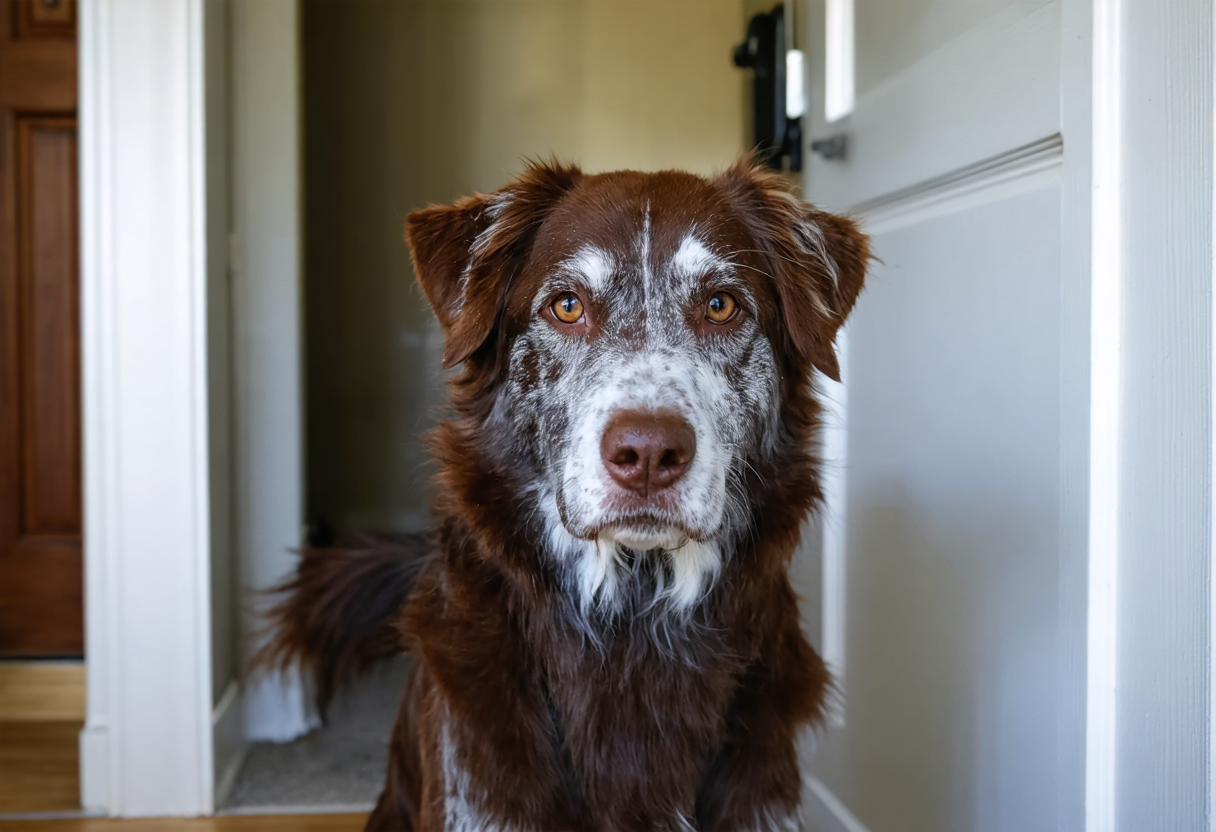
If you share your home with an older dog, you may have watched him stand in a doorway as if he forgot why he walked there, or seen her pace the hallway at 3 a.m. Those moments are unsettling. They can also be early hints of senior dog dementia, a condition veterinarians call canine cognitive dysfunction.
This guide is general information, not a diagnosis. Only a veterinarian can tell you what is behind changes in your dog's behavior, because several treatable problems can look a lot like dementia. What I can offer is a clear picture of what the condition is, what to watch for, and how to make daily life gentler for a dog who is struggling to make sense of the world. If you are thinking about adopting a senior dog, this is also useful background. Plenty of older dogs live comfortably for years, and some never develop mental changes at all.
How do you know if your senior dog has dementia?
You tend to know because of a pattern, not a single odd moment. Any dog can have an off day. Dementia shows up as changes that repeat and slowly become more noticeable over weeks and months.
The signs fall into a few groups. The first is disorientation. A dog may get stuck in a corner or behind a piece of furniture and not figure out how to back out. He may stare at a wall or into space for a long time, stand at the hinge side of a door waiting for it to open, or seem lost in a room he has known for years.
The second group is changes in sleep. Some dogs begin sleeping more during the day and then wander, pace, or whine at night. A dog who once settled down beside the bed at bedtime may now seem restless and unable to get comfortable.
The third group is changes in how a dog relates to the people around him. He might greet you less enthusiastically, seem to forget familiar people or other pets, or stop asking for attention he used to love. Some dogs become clingy and anxious instead, following you from room to room or becoming upset when left alone.
The fourth group is house soiling. A dog who was reliably housetrained may start having accidents indoors, or may go to the door and seem to forget what to do once outside. Please do not scold a dog for this. It is rarely a matter of stubbornness.
Last, watch for shifts in activity and anxiety. Some dogs become less interested in play, food, or walks. Others pace, pant, or startle at things that never bothered them before. Any one of these signs can have other causes, so the practical step is to write down what you see and talk to your veterinarian.
Do senior dogs get dementia?
Yes, they can. Dementia in dogs is an age-related condition in which the brain gradually changes in ways that affect memory, awareness, learning, and behavior. It is why people ask whether old dogs can have dementia at all. The honest answer is that it does happen, and the likelihood rises as dogs get older.
That said, not all older dogs develop it. Many senior dogs stay mentally sharp well into their final years. Slowing down on walks, sleeping more, and taking longer to get up are common with age, and they are not the same as cognitive decline. The difference to watch for is a change in awareness: getting lost, not recognizing people, reversing day and night, or forgetting training and routines that were once solid.
It is also worth saying that dementia is not simply a normal part of aging that owners should shrug off. Even though it is related to age, a veterinarian can look for other conditions, talk through ways to support your dog, and help you plan. Waiting and hoping it goes away can mean the dog goes longer without support.
If you are adopting an older dog from a shelter or rescue, it is reasonable to ask what is known about the dog's health and behavior history, and to schedule a veterinary checkup soon after he comes home. A baseline exam makes it easier to notice changes later.
How long can a senior dog live with dementia?
There is no set timeline, and a firm number for an individual dog is hard for anyone to give. Dementia progresses at different speeds. Some dogs change slowly and stay comfortable for a long time. Others decline more quickly. How long a dog lives with the condition depends on his age when signs begin, how advanced the changes are, and what other health problems are present, such as arthritis, heart disease, or kidney disease.
Because older dogs often have more than one condition at once, it can be hard to separate what is dementia from what is something else. That is another reason regular veterinary visits matter. Treating pain, for instance, can make a dog more comfortable and sometimes calmer, even though it does not change the underlying brain condition.
Rather than focusing on how many months or years are left, many families find it more useful to focus on quality of life. Some questions to consider, and to discuss with your vet:
Is my dog eating and drinking, and does he seem to enjoy food?
Can he rest and sleep without long periods of distress?
Does he still show interest in family, in a favorite spot, or in a gentle walk?
Are his bad days outnumbering his good ones?
Can I keep him clean, safe, and comfortable at home?
Keeping a simple calendar and marking each day as good or hard can help you see the larger trend when emotions run high. When the hard days begin to outweigh the good ones, or your dog seems to be suffering despite your best efforts, that is the moment to sit down with your veterinarian and talk honestly about what comes next. Those conversations can be very hard, but a vet can help you make choices that put your dog's comfort first.
How do you care for a senior dog with dementia?
Care is mostly about making the world predictable and safe. A dog whose memory is slipping may have trouble making sense of his surroundings, so you do some of that work for him.
Start with routine. Feed, walk, and go to bed at roughly the same times each day. Predictability is calming for a dog who cannot count on his own sense of where he is or what comes next.
Next, make the home easy to navigate. Keep furniture in the same places. Use nonslip rugs or runners on slick floors so a confused or arthritic dog does not slide. Block off stairs with a gate if he might fall. Pad or close off tight spaces where he could get wedged. A night-light in the hallway or near his bed can help a dog who wanders after dark. Put water in more than one spot so he does not have to search.
Think about wandering and getting lost. A dog with dementia can slip out an open door or become disoriented in the yard. Make sure his collar has a current ID tag, ask your vet about a microchip if he does not have one, and check that your contact details are up to date. Supervise time outdoors and keep him on a leash or in a securely fenced area.
Handle him gently and let him know you are there. Approach from the front, speak softly, and avoid startling him when he is asleep, because a confused dog can react out of fear. If you have children or visitors, explain that he may not recognize them and needs calm, quiet greetings.
Expect accidents and plan for them. Take him out more often, including right after meals and before bed. Washable bedding, waterproof pads, and a patient attitude go a long way. Please do not punish a dog for an accident he cannot control.
Finally, protect his rest. If he paces at night, ask your veterinarian about it rather than just enduring it. Sleep problems wear on both of you, and there may be options worth discussing.
How can you help a senior dog with dementia?
There is no way for owners to reverse dementia at home, so the goal is to support comfort, keep the mind engaged, and ease the impact of the condition where possible. The most helpful first step is a veterinary exam. Your vet can check for other causes of the behavior changes, look at pain and general health, and talk through options that fit your dog.
Those options may include a diet formulated to support brain health, a supplement your vet recommends, or, for some dogs, prescription medication. The right choice depends on your individual dog, his other health conditions, and any medicines he already takes, so please do not start a supplement or change his food on your own. Your veterinarian can tell you what is appropriate and how to use it safely.
Mental stimulation matters too, within what your dog can handle. Short, gentle activities tend to work better than long, demanding ones. Ideas to consider:
Sniff walks, where you let him investigate smells at his own pace instead of marching him along.
A food puzzle or a treat hidden in a towel, sized for his ability so it feels like a win instead of a frustration.
A few minutes of practicing a familiar cue, like sit or come, with plenty of praise.
New but calm experiences, such as a different safe route or a new textured mat to explore.
Physical exercise helps as well. Regular, moderate movement supports his body and may help him sleep better at night. If he seems stiff or sore, talk with your vet about pain control, since discomfort can make confusion and restlessness look worse.
Watch for signs that an activity is too much. Panting, pacing, hiding, or turning away suggests it is time to stop and let him rest. The aim is to keep him engaged and reassured, not to push him.
How can you tell if your senior dog has dementia?
The clearest way to tell is to compare your dog now with your dog a year ago. Think about who he used to be: how he greeted you, how he slept, how he moved through the house, how he responded to his name. Then notice where the gap is widening.
Try paying close attention for a week or two and writing down what you see. A few useful questions:
Does he get lost or stuck in places he knows well?
Has his sleep pattern flipped, with restlessness at night?
Does he seem to forget routines, commands, or the people he loves?
Are there new accidents in the house despite regular outings?
Has he become more anxious, clingy, or withdrawn than he used to be?
If you can, record a short video of the behavior, especially anything that happens at night or only some of the time. Some dogs act differently in the exam room than at home, so a video can show your vet what you are describing.
At home you can only gather observations, and that is enough to start. Confirming the cause takes a veterinarian, who will likely begin with a physical exam, ask about your dog's history, and may suggest tests to rule out other illnesses. Dementia is often identified by recognizing the pattern of signs while other explanations are set aside, so your notes are valuable.
What can look like dementia but is something else
Because so many conditions overlap with dementia, it is worth knowing what else could explain what you are seeing. Loss of hearing or vision can make a dog seem confused, startled, or unresponsive to his name. Pain from arthritis or dental disease can cause restlessness, pacing, and irritability. Hormonal or organ conditions, infections, and side effects of medications may change behavior too. Brain tumors and other neurological problems can produce signs that resemble cognitive decline. Even a dog who has become anxious in response to changes at home may act differently.
Some of these causes can be treated, and treating them can make a real difference to how your dog feels. That is why I would urge you not to assume the worst, or to assume nothing is wrong, until your veterinarian has examined him. Your vet can sort through these possibilities and tell you what is likely and what is not.
Looking after yourself while you look after your dog
Caring for a dog with dementia can be exhausting. Nights are interrupted, cleaning up is constant, and it hurts to see a dog you love seem unsure of you. Those feelings are normal and do not mean you are doing anything wrong.
Try to share the load if you can. Ask a family member to take a night shift or an outing, and give yourself permission to rest. Lean on friends who understand, and on your vet's team when you have questions. Notice the small good moments: a relaxed nap in a sunny spot, a wagging tail at dinner, a quiet evening with his head on your knee. Those moments still count, and they are often what you will remember later.
When to talk to your vet about dementia signs
Talk to your veterinarian as soon as you notice repeated changes in your dog's awareness, sleep, house training, or interaction with you. Early conversations give you more time to rule out other conditions, address pain, and set up a plan. Please do not wait for the signs to become severe.
Contact your vet promptly, rather than waiting for a routine visit, if your dog seems distressed or frightened much of the time, stops eating or drinking, cannot settle or sleep for long stretches, has sudden changes such as a head tilt, circling, weakness, or seizures, or if you are unsure whether he is comfortable. Sudden or severe changes can point to something other than gradual cognitive decline and deserve fast attention.
Bring your notes and any videos, along with a list of all the medicines and supplements your dog takes. Ask what is likely behind the changes, what you can do at home, which options make sense for him, how often he should be rechecked, and how you will know when his quality of life is slipping. Your veterinarian can also talk with you about comfort-focused care and end-of-life decisions when that time comes.
Dementia changes what life with an older dog looks like, but it does not erase the bond. With patience, a safe and steady home, and your veterinarian's guidance, many dogs can stay comfortable and connected to the people they trust.
Sources:
- https://www.vet.cornell.edu/departments-centers-and-institutes/riney-canine-health-center/canine-health-topics/senior-dog-dementia
- https://www.petmd.com/dog/conditions/neurological/signs-of-dog-dementia
- https://vcahospitals.com/resources/senior-dog/prevent-progression-of-doggie-dementia-in-your-senior-dog