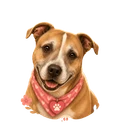
Rottweiler Guide: Size, Temperament, Training, Health and Adoption
What is the history of the Rottweiler dog breed?
The Rottweiler was called the butcher dog of Rottweil, a name tied to driving cattle to market, and the breed grew out of a mastiff type used for herding and guarding. The AKC lists Germany as the breed's origin and places it in the Working Group. The breed was recognized by the AKC in 1931 and by the United Kennel Club in 1950. In more recent years, it has been used for police work, tracking and obedience competition, as well as being kept as a family pet.
Rottweiler size and weight
The AKC lists adult males at 24-27 inches tall and adult females at 22-25 inches. For Rottweiler average weight, the AKC publishes 95-135 pounds for males and 80-100 pounds for females. The AKC places the breed in its large size category.
Rottweiler temperament and personality: are Rottweilers aggressive?
Common traits of Rottweiler dogs include loyalty, confidence and strong protective instincts, and the AKC describes the breed as a loyal, loving and confident guardian. They tend to bond closely with their families, but they are naturally alert and may be cautious with unfamiliar people. Without training, a Rottweiler may become overly protective or hard to manage, so early socialization is described as essential for stable, predictable behavior. VCA describes the breed as generally good with children under supervision, and notes that it may be selective with other pets and need careful introductions.
Exercise needs
Rottweilers need regular daily exercise, and walks, training and structured activities help prevent boredom and behavior problems. VCA suggests they do best in homes with structure, training and access to outdoor space.
Do Rottweilers shed?
The coat is short and smooth and takes little grooming, though the AKC rates shedding as a middle level, 3 of 5. Weekly brushing helps manage shedding and keep the coat in good condition, and routine nail trimming and ear cleaning remain important.
Rottweiler training
The AKC rates trainability at 5 of 5 and mental enrichment at 5 of 5 for the breed. VCA describes the breed as confident and protective, needing consistent leadership, and best suited to experienced or confident owners.
How long do Rottweilers live? Lifespan and health
The AKC gives a general Rottweiler life expectancy of 9-10 years. VCA notes an increased risk of joint disease and certain cancers, especially osteosarcoma. The deep chest raises the risk of gastric dilatation-volvulus, which needs immediate veterinary attention. Ask a veterinarian how screening, weight management and exercise apply to an individual dog.
Considering Rottweiler adoption or a Rottweiler rescue
If you are looking at a Rottweiler rescue or animal rescue Rottweiler, it helps to compare the dog's behavior with the breed's tendencies, such as caution with strangers and a strong protective streak. Ask the organization caring for the dog what it knows about the dog's training and socialization history.
AKC breed facts
These are the American Kennel Club’s general facts and 1 to 5 ratings for the Rottweiler as a breed. General tendencies don’t establish any one dog’s ancestry, personality or health; ask the listing organization about the dog you are considering.
- AKC group
- Working Group
- AKC recognition year
- 1931
- Height (AKC published)
- 24-27 inches (male), 22-25 inches (female)
- Weight (AKC published)
- 95-135 pounds (male), 80-100 pounds (female)
- General life expectancy
- 9-10 years
- AKC size category
- Large
AKC general breed ratings (1 to 5)
- Energy: 3 of 5
- Mental enrichment: 5 of 5
- Trainability: 5 of 5
- Grooming frequency: 1 of 5
- Shedding: 3 of 5
- Vocalization: 1 of 5
- Drooling: 3 of 5
- Adaptability: 4 of 5
- Playfulness: 4 of 5
- Watchful or protective tendency: 5 of 5
- Affection toward family: 5 of 5
- Openness toward strangers: 3 of 5
- AKC child compatibility rating: 3 of 5
- AKC dog compatibility rating: 3 of 5
Health screenings AKC lists for the breed
Breeding evaluations AKC names for the breed; they are not a diagnosis or a testing plan for any one dog.
- Hip Evaluation
- Elbow Evaluation
- Cardiac Exam
- Ophthalmologist Evaluation
- Juvenile Laryngeal Paralysis & Polyneuropathy (JLPP) - DNA Test
Source: American Kennel Club breed profile (opens in a new tab), retrieved November 4, 2026 (snapshot akc-2026-11-04).
Written by Lily's Second Chance with AI assistance from the sources listed under References. Facts were checked automatically against those sources on November 8, 2026.
References
- Breed Standards : Rottweiler | United Kennel Club (UKC) (opens in a new tab), United Kennel Club, checked November 8, 2026
- Rottweiler | VCA Animal Hospitals (opens in a new tab), VCA Animal Hospitals, checked November 8, 2026
- Rottweiler - AKC breed profile (snapshot akc-2026-11-04) (opens in a new tab), American Kennel Club, checked November 4, 2026


