Jindo Breed Guide: Temperament, Size and Care for Adopters
Jindo overview
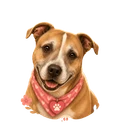
Built sturdily at a medium size, the Jindo belongs to the Spitz type and has a triangular head, prick ears and a straight coat of medium length. Its appearance gives an impression of intelligence, strength and agility.
Where does the Korean Jindo come from?
The breed is believed to have arisen from crosses between native Korean dogs and dogs brought by the Mongols in the 13th century. Dogs left isolated on Jindo Island, off Korea's southern coast, are said to have developed a very pure strain, and Jindos served as hunting and guard dogs. The Korean government designated the Jindo a National Treasure in 1938, and the United Kennel Club recognized the breed on January 1, 1998.
How big is a Jindo? Jindo dog size
For Jindo size, the United Kennel Club standard lists a desirable mature height at the withers of 19½ to 21½ inches for males, against 17½ to 19½ inches for females. Average weight for a male in good condition is given as 40 to 50 pounds, and for a female 33 to 42 pounds. Males are typically larger with heavier heads, while females tend to have more fox-like heads.
Korean Jindo temperament: are Jindo dogs aggressive or friendly?
Jindos are renowned for loyalty to family members and attachment to their home, and many have been known to cover long distances to get back to their original owner. They are devoted to their owner but aloof and suspicious toward strangers, so they are not typically effusive with new people. Jindos are by nature watchful of other dogs and may react aggressively to intruding dogs on their own territory. The breed is described as an enthusiastic hunter that can follow cold trails of small game.
Training a Jindo
Jindos are highly intelligent but independent, and they respond best to positive reinforcement training, preferably from their owner. Puppies are housebroken with little training, and the dogs keep their coats extremely clean.
Jindo coat
The Jindo has a double coat, with a harsh, straight outer coat standing somewhat away from the body and a soft, very dense undercoat. Coat colors include red fawn, white, black, black and tan, wolf grey and brindle.
Written by Lily's Second Chance with AI assistance from the sources listed under References. Facts were checked automatically against those sources on November 7, 2026.
References
- Breed Standards : Jindo | United Kennel Club (UKC) (opens in a new tab), United Kennel Club, checked November 7, 2026


